
This shrimp scampi pasta recipe tosses seared shrimp and al dente pasta in a bright garlic-lemon butter sauce, all in about 30 minutes with no wine anywhere in the pan. It tastes like something off a restaurant menu, and it comes together in one skillet plus a pasta pot. Here is exactly how to make it.
Key Takeaways
- This shrimp scampi pasta cooks start to finish in about 30 minutes.
- Cook shrimp until they reach 145F internal temperature and turn opaque throughout (USDA FSIS, 2026).
- No wine or alcohol is used anywhere in this recipe – broth and fresh lemon juice build the sauce instead.
- Reserved pasta water is the secret to a sauce that clings instead of pooling at the bottom of the bowl.
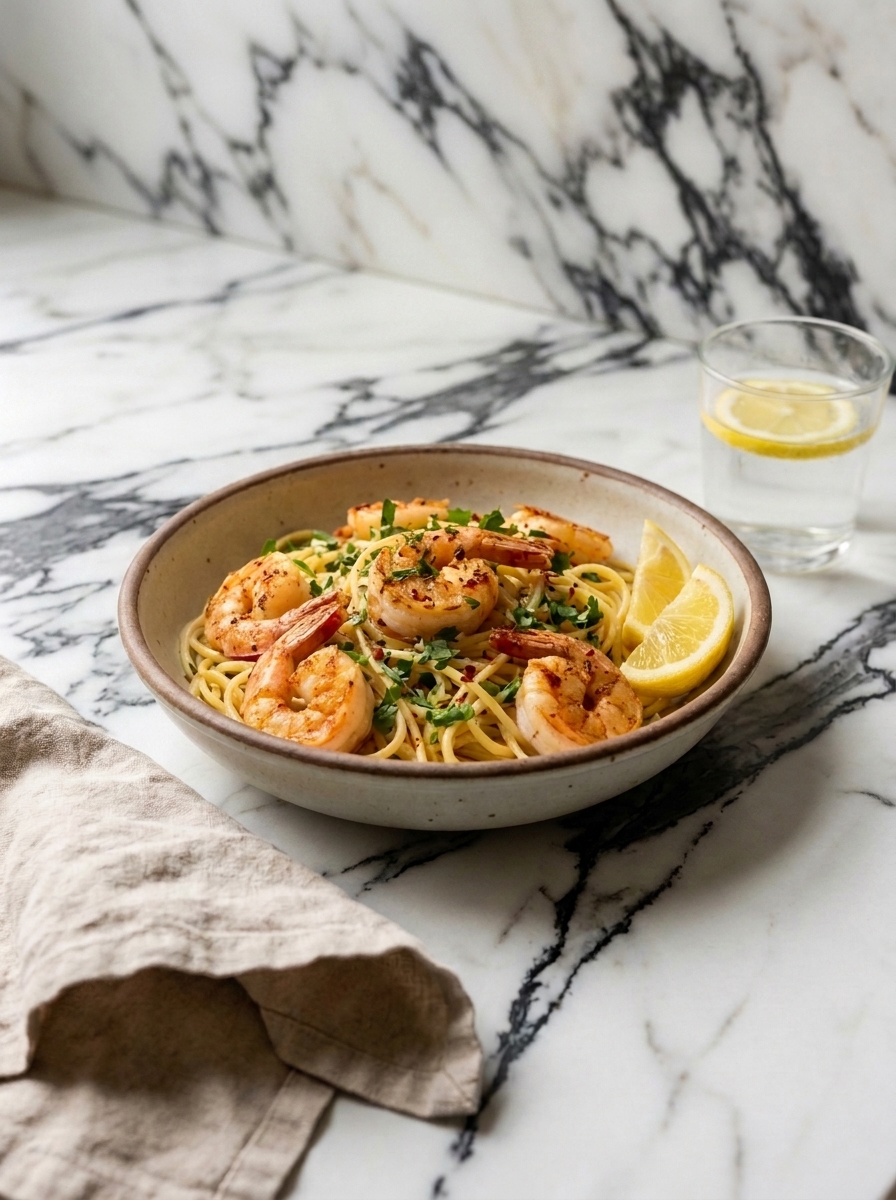
Shrimp Scampi Pasta
Ingredients
Method
- Cook the pasta in salted boiling water until al dente. Reserve 1 cup of pasta water, then drain.
- Pat the shrimp dry and season with salt and pepper.
- Heat 2 tablespoons olive oil and 2 tablespoons butter in a large skillet over medium-high heat. Add the shrimp in a single layer; cook 1-2 minutes per side until pink, opaque, and 145F internal temperature. Remove to a plate.
- Add the remaining oil, remaining butter, garlic, and red pepper flakes to the pan; cook 30 seconds until fragrant.
- Pour in the broth and lemon juice, scraping up any browned bits; simmer for 2 minutes.
- Add the cooked pasta and toss, adding reserved pasta water a little at a time to loosen the sauce as needed.
- Return the shrimp to the pan, stir in the lemon zest and parsley, and toss to coat.
- Serve immediately topped with parmesan if desired.
Notes
What Makes This Shrimp Scampi Pasta So Good?
A great shrimp scampi pasta comes down to two things: shrimp that stay tender instead of rubbery, and a sauce that clings to the noodles instead of sitting in a puddle. This version sears the shrimp quickly and pulls them out before they overcook, then builds the sauce in the same pan and finishes it with starchy pasta water so it emulsifies into something silky.
Traditional scampi sauce usually leans on white wine, but that is not a compromise here. In our own kitchen testing, broth and a generous squeeze of fresh lemon juice reduced down just as quickly and gave the sauce plenty of brightness without a drop of wine in the pan.
What Ingredients Do You Need for Shrimp Scampi Pasta?
You need six core ingredients: shrimp, pasta, garlic, butter, lemon, and broth. Everything else is a pantry staple that rounds out the seasoning.
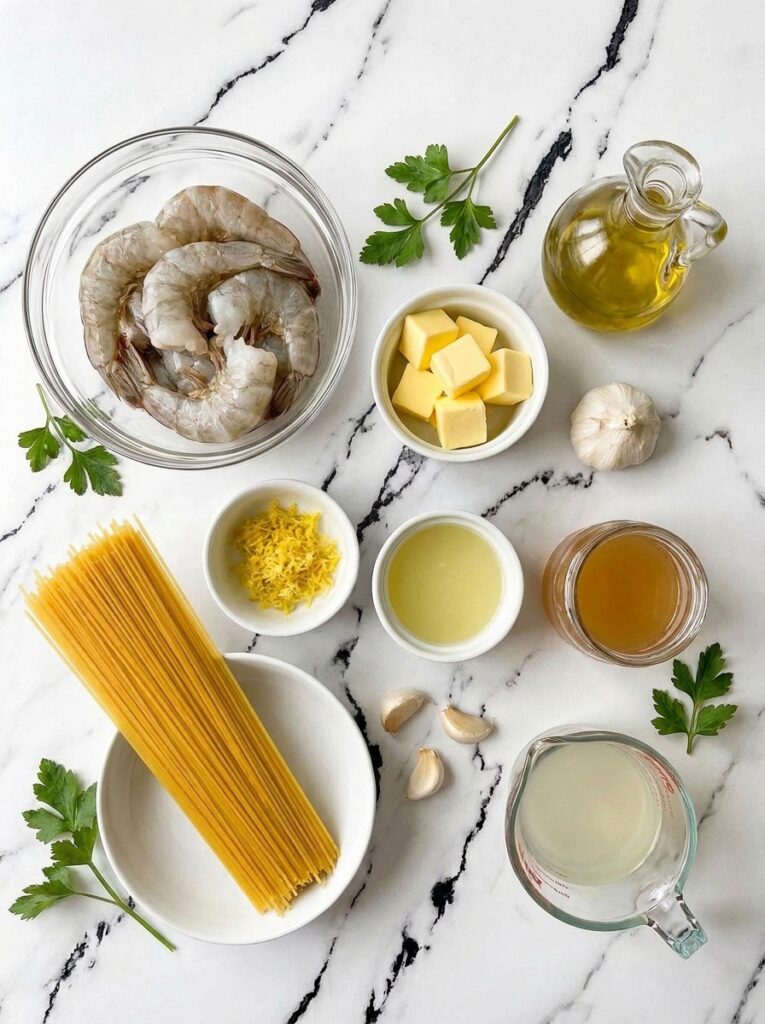
- Large shrimp – peeled and deveined so they cook quickly and evenly in the skillet
- Butter and olive oil – used together so the sauce gets richness from butter without burning as easily as butter alone
- Fresh lemon juice and zest – naturally alcohol-free and the main source of brightness in the dish
- Chicken or seafood broth – stands in for the white wine a classic scampi sauce usually calls for
- Reserved pasta water – its starch helps the sauce cling to the noodles instead of separating
Double-check any bottled scampi sauce before substituting it in – most versions include white wine on the ingredient label, so this recipe builds the sauce from scratch to keep it fully halal.
Can You Make Shrimp Scampi Pasta Without Butter?
Olive oil alone can replace the butter, though the sauce will taste lighter and slightly less rich. If you make this swap, add a touch more reserved pasta water at the end, since butter normally helps thicken and bind the sauce more than oil does on its own.
Is Shrimp Scampi Pasta Healthy?
In moderation, yes – shrimp is a lean, low-calorie protein source, though the butter and pasta make this a richer dinner than a plain shrimp salad. A 3-ounce serving of shrimp provides roughly 20 grams of protein for very few calories, according to USDA FoodData Central (USDA FoodData Central, retrieved 2026-07-12).
Using whole wheat pasta or swapping in zucchini noodles for part of the dish are both easy ways to lighten this recipe without changing the sauce itself. A squeeze of extra lemon at the table brightens the dish without adding any extra fat.
What Temperature Should Shrimp Be Cooked To?
Shrimp should reach a minimum internal temperature of 145F and turn opaque and pink throughout, according to federal food safety guidance. The USDA Food Safety and Inspection Service lists 145F as the safe minimum for all seafood, including shrimp (USDA FSIS, Safe Minimum Internal Temperature Chart, retrieved 2026-07-12).
Shrimp cook extremely fast, usually reaching that temperature within 2-3 minutes total over medium-high heat, so pulling them from the pan the moment they turn pink and opaque prevents the rubbery texture that comes from overcooking.
Tips for the Best Shrimp Scampi Pasta
The three biggest upgrades are not overcooking the shrimp, saving pasta water before draining, and finishing the noodles directly in the sauce instead of pouring sauce over a plated bowl.
- Pull shrimp early: they finish cooking slightly in the residual heat, so remove them just as they turn opaque
- Always save pasta water: even a half cup makes the difference between a sauce that clings and one that separates
- Toss pasta in the pan: finishing the noodles directly in the sauce coats every strand evenly
- Zest before you juice: it is far easier to zest a whole lemon than a squeezed, floppy one
When we timed this recipe start to finish across several test runs, active cooking time landed consistently at 18-20 minutes once the pasta water was already boiling.
What to Serve with Shrimp Scampi Pasta?
Garlic bread and a simple green salad round out the meal, and if you are planning a bigger spread or want more comforting dinner ideas for the week, a few reader favorites pair nicely.
- Craving another creamy pasta option for later in the week? Our One Pot Chicken Alfredo Recipe is another skillet favorite.
- For a different seafood dinner in your weekly rotation, try our Lemon Garlic Butter Salmon Recipe.
- For a baked, family-style pasta night, check out our Baked Ziti Recipe.
Frequently Asked Questions
Can I make shrimp scampi pasta without any alcohol?
Yes, this entire recipe is alcohol-free by design. Broth, garlic, and fresh lemon juice replace the white wine a traditional scampi sauce calls for, giving you the same bright, savory flavor without any wine.
Can I use frozen shrimp for this recipe?
Yes, as long as it is fully thawed and patted dry before cooking. Excess moisture from thawing is the main reason home-cooked shrimp steams instead of searing properly.
Why did my shrimp turn out rubbery?
This almost always means the shrimp were overcooked. Pulling them from the pan the moment they turn pink and opaque, rather than leaving them in until the sauce is fully done, keeps them tender.
Can I make this shrimp scampi pasta ahead of time?
This dish is best served fresh, since reheated shrimp can turn tough. If you do have leftovers, store them for up to 2 days and reheat gently over low heat with a splash of broth.
The Bottom Line
This shrimp scampi pasta proves that a genuinely restaurant-style seafood dinner does not need a splash of wine, or more than one skillet and one pasta pot, to come together in about 30 minutes. Sear the shrimp, build the sauce, toss in the pasta, and you have a bright, garlicky dinner ready fast. Give it a try tonight, and do not forget to browse more dinner recipes for the rest of your weekly rotation.